Kitchen design rules everybody swore by for fifty years? They’re gone. The old way went like this: pick appliances, install cabinets, add countertops, then cram in whatever’s left. But these days, modern designers are doing everything completely backwards now. And kitchens have never looked better.
The Traditional Way Is Breaking Down
It used to be that you started with the fridge. Then the stove. Then dishwasher. Everything else just had to deal with it. It made sense back when kitchens were just kitchens. You cooked. You cleaned. You left. Except that’s not how anybody uses kitchens anymore. Kids do homework at the counter. Friends hang out with wine while dinner cooks. That laptop comes out for work calls between stirring the pasta. The old rules? They’re useless for how people actually live. And those upper cabinets everywhere? Someone decided more cabinets meant better kitchens. Nobody asked if people enjoyed climbing on stools every day. Or if all those closed doors made rooms feel like prison cells.
Starting With People, Not Appliances
So here’s the backwards part. Forget where the oven goes. Forget cabinet styles. Ask this instead: What do the humans who live here actually need? It sounds obvious. It’s not. Most kitchen planning still starts with appliance measurements and plumbing locations. The opposite approach rejects that notion. Start with sightlines. Can mom see the kids in the family room while making lunch? Does dad feel like he’s in exile at the sink facing a wall? These aren’t afterthoughts anymore. They drive everything.
Storage gets weird too. Drawers below instead of cabinets above. Open shelves showing off nice plates instead of hiding everything behind doors. The whole thing flips. Life comes first, then function figures itself out.
The Island Comes First Now
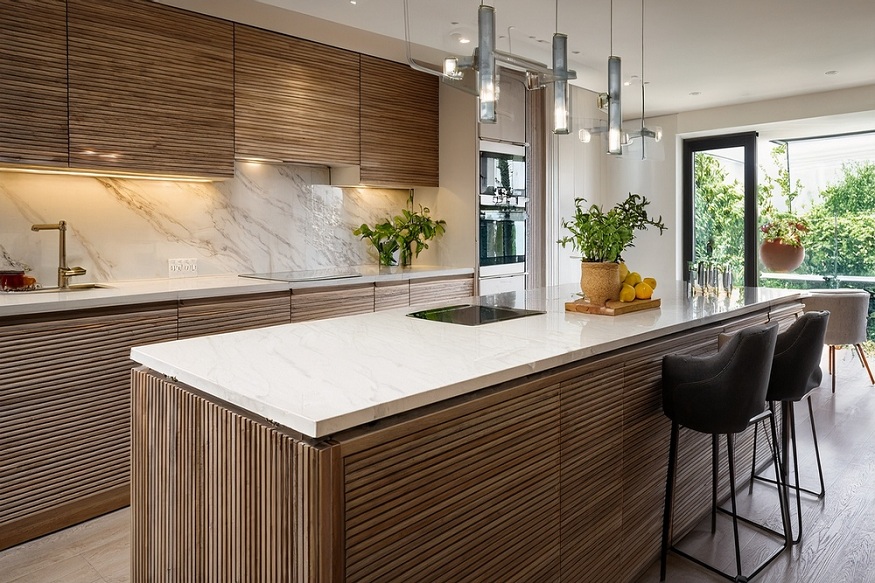
Lots of designers now design the island before anything else. The entire kitchen builds out from there. Sounds insane until you think about it. Where does everyone end up at parties? The island. Where do kids dump backpacks? Island. Morning coffee spot? Afternoon laptop station? Evening wine and cheese location? Island, island, island.
So why not start there? Put the island where it works best for living, not just cooking. Then let traffic flow around it naturally. Suddenly, the whole kitchen makes sense. Work zones appear. Storage follows movement patterns. Everything clicks.
This changes the money game, too. Islands get all the attention, so they get the good stuff. Those gorgeous quartz countertops from places like Bedrock Quartz go on the island where everyone sees and uses them constantly. The perimeter counters? Maybe something simpler. Same wow factor, less cash spent.
Why Fighting Convention Pays Off
Backwards kitchens have a distinct feel upon entry. Airier. Friendlier. More hang-out spot, less commercial kitchen. Plus, this solves those annoying kitchen problems everyone has. Can’t find anything in deep cabinets? Drawers fix that. Hate cooking with your back to everyone? Better sight lines fix that. Dark and cramped? Ditch some upper cabinets for windows.
Money works better, too. Instead of spreading the budget like peanut butter across everything equally, you pick what matters. Spectacular island, basic perimeter. Fancy backsplash, simple appliances. Whatever makes the biggest impact gets the biggest investment.
Conclusion
Calling this backward design is actually pretty funny. It’s probably the most forward-thinking approach kitchens have seen in decades. Finally, someone admitted that kitchens aren’t just about cooking anymore. They’re family headquarters. By designing around actual humans instead of appliance spec sheets, these spaces work better for real life. Whether you are doing full renovation or just rearranging, this backwards thinking is beneficial. Sometimes the best way forward really is backward.