
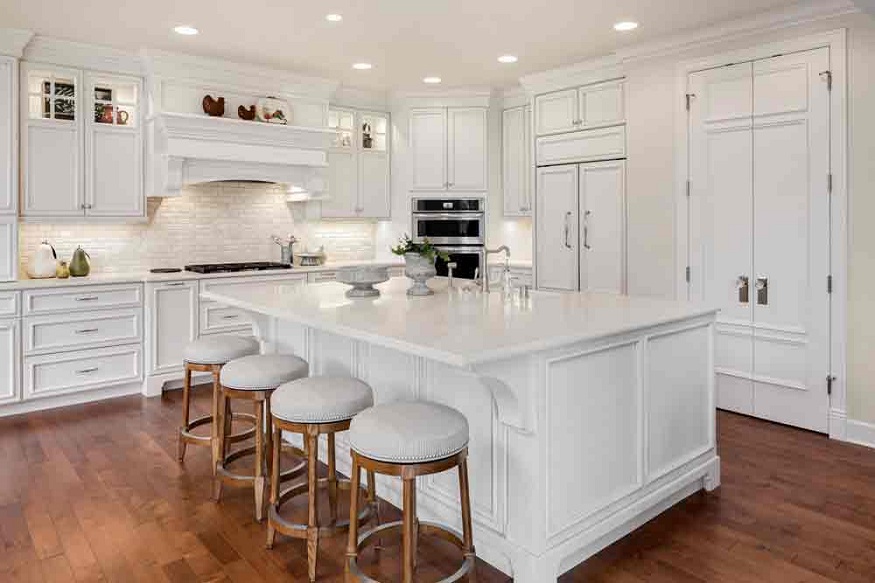
When it comes to cabinetry restoration, the “DIY bubble” has burst—homeowners and property managers have realized that standard latex paint is a temporary mask, not a structural solution. Quick-fix solutions come with a high rate of failure. In the 2026 market, a full kitchen cabinet replacement can cost 3x more than a professional refinish. Stakeholders are realizing that failing to “engineer” a paint job today leads to a massive capital expenditure tomorrow.
1. Resisting Human and Kitchen Impact
Every touch leaves a trace: skin oils, cooking grease, and cleaning agents attack conventional paints. Without specialized coatings, handles and frames discolor, soften, or peel.
Cabinet Painters Calgary experts approach every project with strategies that infuse a molecular defense layer into the surface—turning a simple coating into protection. That’s the difference between a “paint job” that fails in 18 months and a factory-grade finish that holds its newness for years.
Read More: How Custom Storefronts Improve Business Visibility in Burley
- Two-component (2K) polyurethane or post-catalyzed finishes form chemically inert shields
- Surface becomes scrubbable, not just washable, standing up to repeated friction
- Stain-blocking primers lock in tannins and oils before finishing coats
Result:
- Cabinet faces remain pristine despite constant contact
- Grease-heavy areas are protected from long-term damage
- Surfaces maintain consistent sheen, supporting both visual appeal and usability
This is where industrial chemistry meets everyday living—durability that feels effortless.
2. Chemical Armor: Preventing Blocking and Wear
Doors sticking or peeling under normal use isn’t laziness—it’s physics. Standard wall paints remain porous and soft, which is disastrous for cabinetry.
Specialized strategies:
- Waterborne alkyd-urethane or pre-catalyzed lacquers create dense, interlocked molecular grids
- High-hardness films resist humidity and friction
- Sequential chemical layering fuses each coat to the wood and previous layers
Key outcomes:
- Doors glide effortlessly without sticking
- Edges and panels retain a “factory-smooth” aesthetic
- High-use areas like drawer fronts stay flawless, even under daily stress
This isn’t decoration—it’s chemistry applied as structural reinforcement for your cabinetry.
3. Vertical Flow and Factory-Grade Smoothness
Cabinets aren’t flat canvases—they have stiles, panels, and recesses. Traditional coatings leave orange peel, brush marks, or uneven textures.
Specialized strategy:
- High-solids, self-leveling coatings designed for vertical application
- HVLP atomization ensures droplets merge before setting
- Thixotropic engineering prevents sagging or running during vertical spray
Outcome:
Read More: The Best Wood for Log Cabins: Pros, Cons, and Little-Known Facts
- Uniform finish measured in microns, creating the “wow factor” of professional cabinetry
- Light reflects evenly across stiles and panels, revealing no brushwork
- Surfaces achieve a premium, factory-like finish unattainable with DIY methods
This is craftsmanship redefined through physics and chemistry—where perception and performance converge.
4. Moisture and Antimicrobial Defense
Bathrooms, laundry rooms, and kitchens are high-risk zones for humidity and vapor intrusion. Standard paints crack or peel at edges if exposed repeatedly.
Expert solutions:
- Back-priming edges to seal bottom and side panels
- Moisture-resistant lacquers with fungistatic additives
- 2K systems for high-solids protection, particularly on MDF or raw wood
Impact:
- Cabinets resist swelling and cracking over time
- Mold and mildew growth is prevented at the surface level
- High-humidity spaces remain visually flawless and low-maintenance
Treating cabinetry as passive surfaces is a shortcut to failure—experts engineer protection at both microscopic and structural levels.
In essence, the collective advantage of this “engineered” cabinetry renovation through paint work is the elimination of the failure cycle. By leveraging these professional insights and working with a proven painter, you move from a pattern of “paint, peel, and repeat” to a single, high-performance intervention that secures the home’s “bones.”